
Registration & Coffee Break
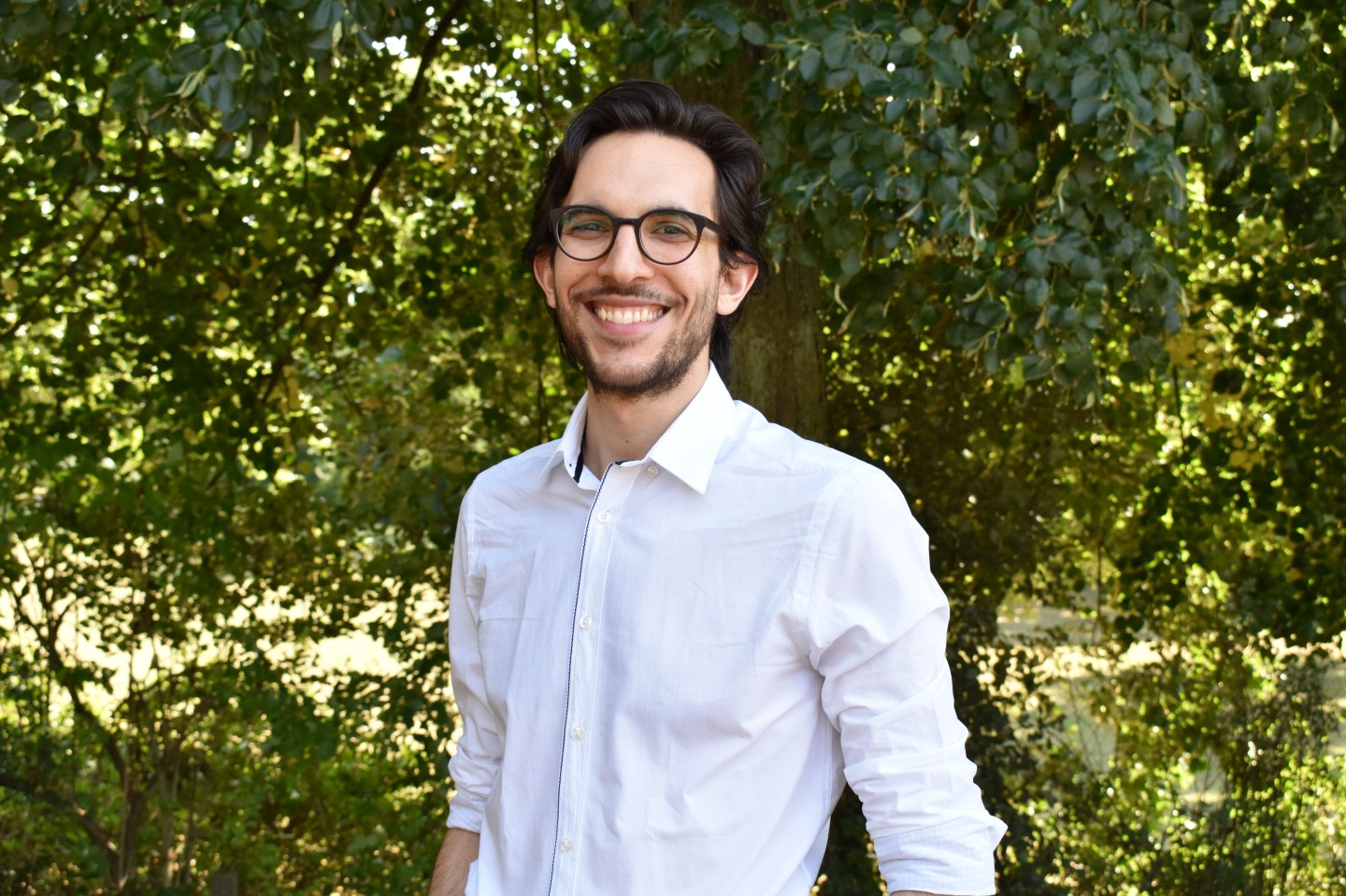
Emre Sertöz
Mathematical Institute
Leiden University

This workshop brings together experts in dynamics, algebra, and particle physics, and aims to explore themes at the confluence of these areas. Particular topics of interest include the design of mathematical languages to describe and understand physical phenomena on all scales, as well as algebraic and althorithmic aspects of discrete and continuous dynamical systems.
Venue: Max Planck Institute for Software Systems: Campus E1 5 66123 Saarbrücken
Date: 15.-17 October 2025
Mathematical Institute
Leiden University
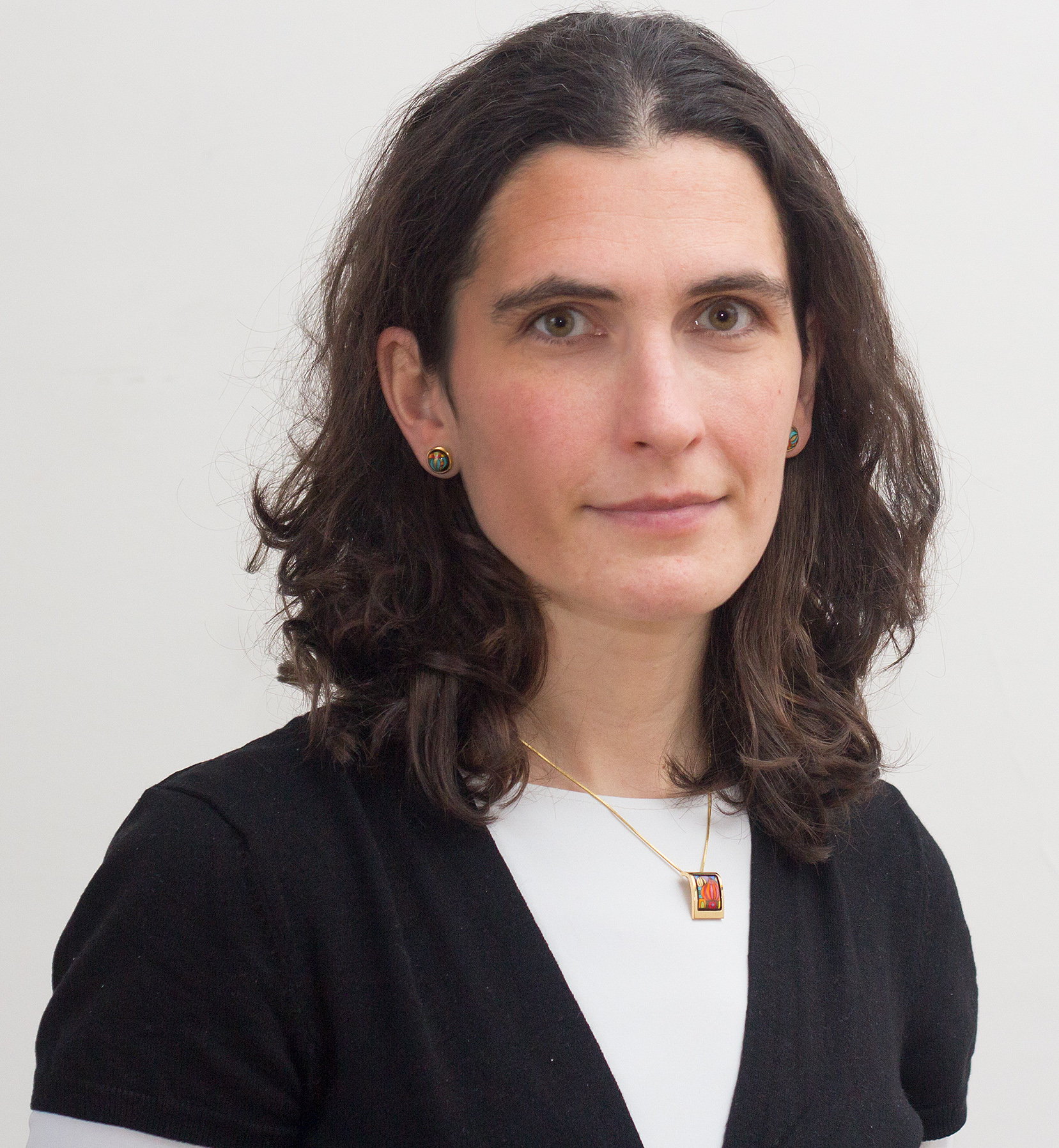
Faculty of Informatics
Vienna University of Technology

Institute for Advanced Study
Princeton University
It is impossible to design an algorithm capable of computing with arbitrary real or complex numbers: there are simply too many of them. By contrast, many numbers arising in the sciences belong to a countable set, conjecturally accessible to computation. These are the periods — values of integrals of geometric origin, with examples ranging from the circumference of the unit circle to Feynman integrals with rational momenta.
Conjectures of Grothendieck, Kontsevich, and Zagier imply that not only the periods themselves, but also the algebraic relations between them are of geometric origin. This suggests that a substantial part of transcendental number theory falls within the purview of algebraic geometry.
Even if these conjectures hold, the algorithmic challenge remains: can we effectively determine all relations among a given set of periods? In the univariate case — so-called 1-periods — Huber and Wüstholz (2022) proved that all relations are indeed of algebraic-geometric origin. In joint work with Joël Ouaknine (MPI-SWS) and James Worrell (Oxford), we turned this result into an algorithm that finds all linear relations among such integrals, and in particular decides if a given univariate period is transcendental.
Since the early days of the foundation of quantum mechanics, 100 years ago, it was clear that a new kind of mathematics was needed in order to capture the new physics. At that time, John von Neumann formulated his principles of quantum mechanics and one of the main features was noncommutativity – the fact, that two observables A and B need not to commute. This was the starting point of a systematic study of noncommuting operators which quickly emancipated from „just a physics tool“ to an own branch in mathematics as such. More and more often, it is called quantum mathematics nowadays and it comprises C*-algebras (aka quantum topology), von Neumann algebras (aka quantum measure theory), Connes’s noncommutative geometry (aka quantum differential geometry), quantum groups and many more.
I will give a brief survey on quantum mathematics, and I will then focus on an introduction to quantum symmetries and their link to quantum information theory. I aim to speak to mathematicians, physicists and computer scientists at the same time.
In 2012, Keiji Oguiso showed that there exist projective K3 surfaces with a fixed point free automorphism of positive entropy. It turns out that these surfaces and the corresponding automorphisms actually coincide with a much easier description of certain quartic surfaces given by Cayley in 1870: they are the zerosets of the determinants of 4×4 matrices with linear forms in four variables as entries. We will give some concrete examples and show some pictures of the dynamics induced by these automorphisms. This is joint work with Dino Festo, Bert van Geemen, and Alice Garbagnati.
Certain exponential integrals serve as generating functions of labeled edge-colored graphs. Based on this, we derive asymptotics for the number of edge-colored graphs with arbitrary weights assigned to different vertex structures. The asymptotic behavior is governed by critical points of a polynomial. As an application, we discuss the Ising model on a random graph and show how its phase transitions arise from our formula. Moreover, we establish connections to Lee–Yang phenomena in statistical physics by showing the accumulation of Lee-Yang zeros along certain limit curves. These limit curves reveal the location of phase transitions. Based on joint work with Michael Borinsky and Chiara Meroni.
Linear differential equations with polynomial coefficients in a complex variable appear naturally in fields such as combinatorics, algebraic geometry, and mathematical physics. Their numerical solution, and in particular that of so-called connection problems between regular singular points, finds applications that include the high-precision computation of values of Feynmann integrals, volumes of semi-algebraic sets, or more generally periods of algebraic varieties, the asymptotic expansion of linearly recurrent sequences, and the factorization of linear differential operators. In this talk, I will give a demonstration of a numerical ODE solver that focuses on this very special class of equations, supports arbitrary-precision computations, and provides rigorous error bounds along with the numerical results. I will also demonstrate software for some of the applications listed above built on top of this solver.
The time-honored tool for modeling cause-effect relationships is a Bayesian network. This model postulates noisy functional dependencies among random variables according to a directed graph. Bayesian networks enjoy widespread use despite two shortcomings: (1) different causal specifications may define the same class of probability distributions, so cause-effect relationships cannot be learned reliably from observational data alone; and (2) if the directed graph contains cycles (“feedback loops”), the model loses desirable statistical properties such as global identifiability of parameters. In this talk I want to introduce an emergent alternative paradigm in causal modeling which aims to address these issues. The interactions of random variables are modeled by stochastic diffusion processes in equilibrium. This temporal perspective easily accommodates feedback loops. I will cover the algebraic nature of these models, their independence structure and recent identifiability results.
Take an algebraic object M. We want to find algorithms that decide whether a given statement (in a suitable language) about M is true. I will discuss how dynamical systems have recently been used to produce such decidability and undecidability results, including the following. (1) The monadic second-order theory of (N; <, {2n : n ≥ 0}, {3n : n ≥ 0}) is decidable. (2) The first-order theory of (N; <, +, {2n : n ≥ 0}, {3n : n ≥ 0}) is undecidable. (3) The first-order theory of (N; <, n ↦ |τ(n)|), where τ(n) is the Ramanujan tau function, is undecidable.
Precise predictions in particle physics rely on the computation of multiloop scattering amplitudes in quantum field theory. In this talk, I will discuss how algebraic algorithms facilitate these calculations. I will review methods for determining and evaluating Feynman integrals, the fundamental building blocks of scattering amplitudes. To manage the complexity of their coefficients, techniques such as finite-field sampling and multivariate partial fraction decomposition play a central role. I will present recent progress in this area and highlight open questions where a deeper structural understanding could further advance our predictive capabilities in fundamental physics.
In the aftermath of Matiyasevich’s negative solution to Hilbert’s Tenth Problem, J.R. Buchi gave an argument showing that even much simpler systems, those defined by an arbitrary number of diagonal quadratic forms in an arbitrary number of indeterminates, cannot be decided over the integers. His argument depended on an unproven hypothesis which is now known as Buchi’s problem: there exists a positive integer n0 such that whenever n ≥ n0 and x1², …, xn² are n increasing integer squares with constant second difference equal to 2, they must be consecutive. Buchi suggested that it suffices to take n0 = 5. We prove this assertion, thereby completing Buchi’s argument that arbitrary systems of diagonal quadratic form equations are undecidable over the integers.
We warmly invite all registered participants to a joint workshop dinner generously sponsored by Max Planck Institute for Software Systems
Quantum field theory does a good job of predicting the behaviour of small numbers of quantum particles. These calculations involve the combinatorics of graphs, which becomes intractable as the number of particles increases. We introduce a new approach to setting up these calculations using piecewise linear functions coming from tropical geometry. Surprisingly, we find this is well adapted for the limit of _large_ numbers of particles, where the calculations resemble the statistics of random walks. The results suggest that quantum field theory has a broader domain of application than we otherwise expect.
Differential dynamical systems appear in many applications in modeling and control theory. Frequently, for such dynamical systems, the task is to compute the minimal differential equation satisfied by a chosen coordinate. This task arises in particular in applications where only part of the solution data can be experimentally observed. As such, it is an important special case of more general differential elimination problems. We will observe two approaches to tackle the computation of such a minimal equation in the evaluation-interpolation fashion.
First, we will present a new result, which provides explicit bounding hyperplanes for the Newton polytope of such a minimal equation. The obtained bounds are based on the degrees of a given dynamical system and are proven to be sharp in “more than half the cases”. We demonstrate an evaluation-interpolation algorithm for computing minimal differential equations for dynamical systems resulting from these bounds.
Second, we will discuss a new approach of computing so-called mixed fiber polytopes in the problem of polynomial elimination. We demonstrate the increase in practical performance of our algorithm compared to existing methods and discuss an application of our work to differential elimination.
This is a joint work with Gleb Pogudin and Rafael Mohr
Algebraic techniques, such as Gröbner bases, have a long and successful history in automatic geometric theorem proving. Recently, these methods have found a new and promising area of application in the context of proving operator statements. Operator statements are first-order formulas involving identities of matrices or, more generally, of linear operators. In this talk, we present how the correctness of an operator statement can be translated into an algebraic statement about noncommutative polynomials, which can be verified automatically using computer algebra. Moreover, we discuss how to certify the invalidity of false operator statements by constructing explicit counterexamples.
I will explain how expanding dynamical systems can be efficiently encoded using group theory and finite state automata; and, in fact, how these two domains correspond tightly to each other. I will focus on complex dynamics — iteration of a rational map on the Riemann sphere — and show how fundamental questions in this domain can be answered, both theoretically and in practice.
Many defining functions in dynamics are represented by multivariate real polynomials. Under this assumption, key properties of dynamical systems often have an algebraic interpretation such as the question of nonnegativity of real, multivariate polynomials. Nonnegativity is not only a classical question in real algebraic geometry. It can also be tackled via polynomial optimization; a thriving field in the past 25 years. In this talk I present two instances highlighting this connection of polynomial optimization and dynamics, which we investigate in recent and ongoing projects: First, deciding mono- vs. multistationarity in 2- and n-site phosphorylation networks in terms of their kinematic parameters (joint work with E. Feliu, N. Kaihnsa, and O. Yürük). Second, computing Lyapunov functions for polynomial ODE systems (joint work with J. Heuer and N. Rieke). Interestingly, both of these results moreover lead to (different) combinatorial follow-up problems, which I will also briefly explain. This talk is meant as an invitation to the audience to further explore the intersection of polynomial optimization, dynamical systems, and combinatorics.
Venue: Max Planck Institute for Software Systems (MPI-SWS), Campus E1 5, 66123 Saarbrücken, Germany.
Registration Desk: Lobby. Hours: 08:30–10:30 daily.
Wi-Fi: For guest/ visitor Wi-Fi, please ask the organizers on site to give you the login credentials.
Help:
The nearest major international airport is Frankfurt International Airport (FRA).
From Frankfurt Airport, Saarbrücken can be reached most conveniently by train. Regular connections are available throughout the day, including direct connections. Depending on the connection, the journey takes typically between 2 and 2.5 hours. Trains arrive at Saarbrücken Central Station (Hauptbahnhof). For planning your journey to Saarbrücken, we recommend using the Deutsche Bahn (DB) Navigator App and taking the direct connection line RE3.
Set your GPS to “Campus E1 5, 66123 Saarbrücken”. Follow campus signage to visitor parking (see “Parking”).
There is very good public transportation within Saarbrücken and between the city center and the campus. The MPI-SWS campus location can be reached by bus in approximately 30min from Saarbrücken Central Station.
Bus stops within walking distance from the institute include:
For convenient route planning and ticket purchases within Saarbrücken, we recommend using the app Saarfahrplan app.
Parking is available at the nearby Parkhaus Ost (East Parking Garage) on the university campus. From there, the institute is within a short walking distance.
Handy areas: Near Campus (quiet), City Center (restaurants, station), and Budget options.
We aim to make the workshop accessible to all participants.
Ask the registration desk for nearby pharmacies and clinics; we can help arrange assistance if needed.



The workshop is organized by the Max Planck Institute for Software Systems and supported in part by the Max Planck Center for Particle Physics, Cosmology and Geometry and the Max Planck Institute for Mathematics in the Sciences.
The Dynaverse 2025 workshop is a collaboration of DynAMiCs (ERC Synergy Grant: 101167561) and Universe+ (ERC Synergy Grant: 10118787).