
Putting Transcendence to Work
Abstract
In this talk we describe how transcendence results can be used to prove termination of algorithms for analysing dynamical systems, focussing on recurrence sequences and their generalisations. The talk will discuss both the use of such results and techniques for obtaining the results. We will take the opportunity to highlight and celebrate the influence of Florian Luca in this area.
Transcendence and algebraic independence of numbers with morphic $\beta-$expansion: history, recent developments and open questions
Abstract
One might be surprised by the scarcity of results on the properties
of expansions of irrational real numbers. For instance, it remains
unknown whether the decimal expansion of the golden ratio contains
infinitely many zeros, and or whether there is some irrational
number whose ternary and decimal expansions may be expressed with
only two digits. Two heuristics have guided research in this area.
First, the expansions of irrational algebraic numbers--and, more
broadly, irrational periods--are expected to behave like random
sequences. Second, any structure present in the expansion of an
irrational number in one base is expected to disappear when the
number is expressed in a multiplicatively independent base, such as
switching from base 2 to base 10.
Mathematicians have tackled these problems by using a shift in
perspective. On the one hand, they have demonstrated the
transcendence of numbers whose expansions have too low complexity.
On the other, they have established linear or algebraic independence
for numbers with some well-structured expansions, providing that the
corresponding bases are multiplicatively independent.
In this talk, we focus on expansions generated by finite automata
and, more generally, by substitutions. There are two independent
methods to address these questions: one relies on Diophantine tools
such as Schmidt's Subspace Theorem, while the other employs a
transcendence method introduced a century ago by Mahler. There are
been recent advances in this field, stemming from both approaches.
Our goal is to provide an overview of what is known from what
remains open. We will present both methods and discuss their
respective strengths and limitations.
Coffee break
Transcendence and algebraic independence of numbers with morphic $\beta-$expansion: history, recent developments and open questions
Abstract
One might be surprised by the scarcity of results on the properties
of expansions of irrational real numbers. For instance, it remains
unknown whether the decimal expansion of the golden ratio contains
infinitely many zeros, and or whether there is some irrational
number whose ternary and decimal expansions may be expressed with
only two digits. Two heuristics have guided research in this area.
First, the expansions of irrational algebraic numbers--and, more
broadly, irrational periods--are expected to behave like random
sequences. Second, any structure present in the expansion of an
irrational number in one base is expected to disappear when the
number is expressed in a multiplicatively independent base, such as
switching from base 2 to base 10.
Mathematicians have tackled these problems by using a shift in
perspective. On the one hand, they have demonstrated the
transcendence of numbers whose expansions have too low complexity.
On the other, they have established linear or algebraic independence
for numbers with some well-structured expansions, providing that the
corresponding bases are multiplicatively independent.
In this talk, we focus on expansions generated by finite automata
and, more generally, by substitutions. There are two independent
methods to address these questions: one relies on Diophantine tools
such as Schmidt's Subspace Theorem, while the other employs a
transcendence method introduced a century ago by Mahler. There are
been recent advances in this field, stemming from both approaches.
Our goal is to provide an overview of what is known from what
remains open. We will present both methods and discuss their
respective strengths and limitations.
Sturmian Lattice and Aperiodic Tile Sets
Abstract
An surprizing grid structure had emerged in the tiling by Smith Turtle: the aperiodic monotile found in 2023 by Smith-Myers-Kaplan-GoodmanStrass. We abstract it and define "Sturmian Lattice". We study its mathematical structure, and classify all of them. They may be understood as a generalization of Sturmian sequences to a plane. Then we give a construction of aperiodic tile set out of this Sturmian Lattice when its slope is any quadratic irrational number. This is a joint work with Tadahisa Hamada and Katsuki Ito, both are PhD students in U. Tsukuba.
Lunch break
The multifractal nature of von Koch functions
Abstract
In a famous paper published in 1904, on Koch introduced the curve that still serves nowadays as an iconic representation of fractal shapes. In fact, von Koch's main goal was the construction of a continuous but nowhere differentiable function, very similar to the snowflake, using elementary geometric procedures, and not analytical formulae. We prove that a parametrized family of functions (including and) generalizing von Koch's example enjoys a rich multifractal behavior, with several phase transitions; The analysis relies on the study of the orbits of an underlying dynamical system and on the introduction of self-similar measures and IFS adapted to the problem. This is a joint work with Zoltan Buczolich and Yann Demichel.
Coffee break
Variational principles for the dimensions of statistically self-affine carpets and sponges
Abstract
We will present recent results about the Hausdorff and box dimensions of the random sets obtained as limit sets of the action of percolation processes on some classes of self-affine carpets and sponges, especially in the case of Gatzouras-Lalley’s model.
Two-dimensional Lochs-type theorems
Abstract
Lochs' theorem and its generalizations are conversion theorems that relate the number of digits determined in one expansion of a real number as a function of the number of digits given in some other expansion. In its original version, Lochs' theorem, published in 1964, related decimal expansions to continued fraction expansions. Such conversion results can also be stated for general numeration systems and sequences of interval partitions. In this talk, we explore the scope and limitations of the methods due to K. Dajani, M. de Vries, and A. Johnson for partitions of the plane, and we state new Lochs-type theorems with mild geometric assumptions. Our focus is on positive entropy partitions, including the one generated by the Ostrowski dynamical system.
Transcendence of Simple Geodesics on Finite Covers of the Modular Orbifold
Abstract
The geodesics $\xi$ on the hyperbolic plane $\mathbf{HP}$ are determined by their endpoints $(\xi^-, \xi^+)$ in the real projective line. Consider a finite cover of the modular orbifold $S = \Gamma \ \mathbf{HP}$ and a hyperbolic geodesic $\xi$ whose projection to $S$ is simple (without double points). We then show that its endpoints $\xi^\pm$ are necessarily either rational or quadratic, or transcendental. This relies on the fact that simple geodesics define languages of sublinear complexity, and on a transcendence criterion for continued fractions having long repetitions due to Adamczewski and Bugeaud.
Matching in one dimensional dynamics; a survey
Abstract
Matching is a phenomenon found in families of interval maps with specific number-theoretic properties. It can be the cause of piecewise monotone or even smooth dependence of the entropy, Lyapunov exponents and invariant densities on the parameter of the family. In this survey, we present some families where matching occurs and is even prevalent: open, dense and of full Lebesgue measure in parameter space. We also discuss the bifurcation theory of the matching phenomenon, hoping to illustrate some common period doubling and renormalization aspect that it appears to imply.
Coffee break
Matching in one dimensional dynamics; a survey
Abstract
Matching is a phenomenon found in families of interval maps with specific number-theoretic properties. It can be the cause of piecewise monotone or even smooth dependence of the entropy, Lyapunov exponents and invariant densities on the parameter of the family. In this survey, we present some families where matching occurs and is even prevalent: open, dense and of full Lebesgue measure in parameter space. We also discuss the bifurcation theory of the matching phenomenon, hoping to illustrate some common period doubling and renormalization aspect that it appears to imply.
An aperiodic set of Wang tiles for every quadratic irrational
Abstract
We propose a sufficient condition for the non-periodicity of a set of Wang tiles. It applies to sets of Wang tiles whose tiles have vertical or horizontal stripes. The proof is based on a geometric argument involving a quadrilateral circumscribed to a parabola from which we conclude the irrationality of the densities of the vertical and horizontal stripes. We apply the sufficient condition to propose new proofs of non-periodicity of known sets of Wang tiles, including an encoding of Penrose tilings into 24 Wang tiles and the family of metallic mean Wang tiles. Conversely, for every pair $(\alpha,\beta)\in[0,1]^2$ of irrational numbers in the same quadratic number field, we construct a finite aperiodic set of Wang tiles with stripes that admits a valid tiling whose density of vertical stripes is $\alpha$ and density of horizontal stripes is $\beta$. This is a joint work with Jarkko Kari and Pieter Mostert available at arXiv:2606.24693. In this board talk, we will present the first theorem and the method to find the quadrilateral from a set of Wang tiles with stripes.
Decidability of Matrix Equations (with connections to Skolem's problem)
Abstract
We will consider multiplicative matrix equations of the knapsack problem type and special cases such as the mortality problem or the identity problem. In the first part an overview on classical results is given. In the second part connections to Skolem's problem are outlined. In particular, some important contributions of Florian Luca to this subject are presented and connections to analytic and diophantine number theory are discussed. The third part is devoted to special instances of the identity problem, which were published in a joint work by Heintze- Noubissie-Tichy (Combinatorics and NumberTheory, 2025). The main tools are effective diophantine methods.
Lattice Points Counting through o-minimality
Abstract
Counting lattice points can be viewed as a geometric formulation of the Diophantine problem of finding integer solutions to a system of equations and/or inequalities. Several techniques have been developed to address this problem, most of them rooted in either Harmonic Analysis or Model Theory. This talk will primarily survey the latter approach, highlighting recent developments in the problem of counting solutions to systems of homogeneous forms. Particular emphasis will be placed on applications of these methods to a range of questions arising from the work of Athreya, Margulis, Sarnak, and others.
Coffee break
Lattice Points Counting through o-minimality
Abstract
Counting lattice points can be viewed as a geometric formulation of the Diophantine problem of finding integer solutions to a system of equations and/or inequalities. Several techniques have been developed to address this problem, most of them rooted in either Harmonic Analysis or Model Theory. This talk will primarily survey the latter approach, highlighting recent developments in the problem of counting solutions to systems of homogeneous forms. Particular emphasis will be placed on applications of these methods to a range of questions arising from the work of Athreya, Margulis, Sarnak, and others.
Construction of normal numbers involving primes
Abstract
The construction of normal numbers by concatenating function values has a long history in number theory. The references range from the first construction of Champernowne using the identity to show that \[0.1\,2\,3\,4\,5\,6\,7\,8\,9\,10\,11\,12\,\ldots\] is normal to base $10$; to the construction of Nakai and Shikawa using polynomials with real coefficients. In recent years functions that grow polynomially became of interest and they are also used for the construction of normal numbers. Considering subsequences like the primes those constructions should also yield normal numbers. For example the construction of Copeleand and Erd\H{o}s showing that \[0.2\,3\,5\,7\,11\,13\,17\,19\,23\,29\,\ldots\] is normal to base $10$. However, there are not so many proved examples involving polynomials in primes and in the present talk we want to shed some light on recent results and their connection with symbolic dynamical systems.
Lunch break
Linear-exponential Hensel Lifting
Abstract
The classical technique of Hensel lifting describes the zeros of a polynomial map module $p^e$ using its zeros modulo $p$. The same technique fails in many aspects for non-polynomial maps. In this talk, we introduce a version of Hensel lifting for linear-exponential maps over a local ring of positive characteristic. This allows us to characterize zeros of linear-exponential maps over rings by reducing to the case of fields. Based by joint work with Doron Shafrir.
Coffee break
Twisted Rational Zeros and Local-Global Principles for LRS
Abstract
Bilu et al recently introduced the concept of twisted rational zeros to explain some phenomena regarding formulae for the p-adic valuation of linear recurrence sequences (LRS). They left some questions open; namely, given a twisted rational zero of an LRS, are there infinitely many primes p for which it is identified as (or avoids being) a p-adic zero? I will talk about recent work that answers these questions and gives connections to local-global principles for integer zeros of LRS. In particular, the answer to the questions above on twisted rational zeros and p-adic zeros may be applied to prove a local-global principle for simultaneous zeros of two coprime LRS, subject to the p-adic Schanuel conjecture.
Effective arithmetic geometry
Abstract
I describe algorithms to linearise the dynamics of Frobenius acting on varieties over finite fields and discuss applications to point counting and factoring polynomials.
Preservation Theorems for Transducer Outputs
Abstract
Suppose we have a deterministic finite-state transducer $\mathcal{A}$ and an infinite word $x$, and run $\mathcal{A}$ on $x$ to obtain an infinite word $\mathcal{A}(x)$. Which properties of $x$ are guaranteed to also hold for $\mathcal{A}(x)$? In this talk, we consider this preservation question for various well-known classes of words having desirable combinatorial properties, e.g., recurrent words, primitive morphic words, and words that admit factor frequencies. The celebrated Krohn-Rhodes theorem provides the framework for proving our preservation results, and our techniques are based on the ergodic theory of symbolic dynamical systems, i.e., shift spaces. This talk is based on joint work with Valérie Berthé, Herman Goulet-Ouellet, Toghrul Karimov, and Dominique Perrin.
Markoff spectrum of Hecke groups
Abstract
In 1997, Vulakh characterized the Markoff spectra of Hecke groups of index $q\ge 3$ up to their first accumulation points. In this talk, we develop an expansion of real numbers using the Hecke groups and completely characterize the real numbers corresponding to the initial discrete parts of the Markoff spectra of the Hecke groups. This is joint work with Byungchul Cha.
Coffee break
Word combinatorics and Staircase Bifurcations in an Inhomogeneous Multiplicative Lagrange Spectrum
Abstract
We consider an inhomogeneous multiplicative analogue of the Lagrange spectrum, focusing on its combinatorial and symbolic structure. More precisely, we study the set \[ L(10;\eta) = \left\{ \limsup_{n\to\infty}\|\xi 10^n-\eta\| \mid \xi \in {\bf R} \right\}. \] As the parameter \(\eta\) varies, the relevant extremal order on infinite words changes, and this causes a bifurcation in the discrete part of the spectrum. The main role is played by explicit extremal words generated from the substitution \(\tau(1)=2\) and \(\tau(2)=211\). These words describe the isolated values below the first accumulation point. In particular, for a sequence of parameters tending to \(0\), the number of such isolated values is exactly \(k+2\), giving a staircase-type bifurcation in the discrete spectrum. In this way, the talk highlights a word-combinatorial mechanism behind a staircase-type bifurcation in an arithmetic spectrum.
Sparse automatic sets and their interactions
Abstract
Automatic sets are sets of natural numbers whose expansions in a fixed base are recognized by finite automata. Cobham's theorem describes the limitations of recognizability in two multiplicatively independent bases: a set recognizable in both must be ultimately periodic. This raises a related question: what can be said about the intersection of two sets, each recognizable in one of the bases? Sparse automatic sets provide a setting in which this question admits a finiteness theorem, together with quantitative bounds in terms of the bases and the accepting automata. This result connects the structure of sparse regular languages with Diophantine equations and also extends to higher dimensions.
Lunch break
A dichotomy for k-automatic expansions of Presburger arithmetic
Abstract
The $k$-automatic sets, those whose base-$k$ representations form a regular language, are a well-studied class of subsets of the natural numbers. In this talk, we discuss our proof of the following dichotomy: given a $k$-automatic subset $X$ of the natural numbers, either $X$ is definable from Presburger arithmetic expanded by a predicate for the powers of $k$, or else the Presburger arithmetic expanded by $X$ itself defines any other $k$-automatic set.
Coffee break
On existential Büchi arithmetic in two coprime bases
Abstract
For multiplicatively independent natural numbers $\alpha$ and $\beta$, Villemaire showed in 1992 that the first-order theory of Presburger arithmetic expanded with both Büchi predicates $V_\alpha$ and $V_\beta$ is undecidable, as it encodes multiplication. In recent years, Hieronymi and Schulz showed that Presburger arithmetic expanded with the weaker power predicates $\alpha^\mathbb{N} = \{\alpha^n: n \in \mathbb{N}\}$ and $\beta^\mathbb{N}$ is also undecidable, while Karimov et al. showed that the existential fragment of this theory is decidable. These results left open the natural problem of determining the decidability of the existential fragment of Villemaire's original expansion. We settle this question for coprime $\alpha$ and $\beta$. Specifically, we give a quantifier-elimination argument that proves the decidability of the existential fragment of $\mathsf{FO}(\mathbb{Z};<,+, V_\alpha, V_\beta)$.
Maths without Mathematicians? Open discussion regarding the impact of AI on the mathematical profession
Abstract
Recent advances in artificial intelligence — from large language models capable of engaging with formal proofs to automated theorem-proving systems and AI-assisted
conjecture generation — are beginning to reshape how mathematicians think about their discipline.
This session offers an open forum for mathematicians at all career stages to discuss the practical, intellectual, and professional implications of these tools.
This session is structured as a facilitated conversation, drawing on participants' own experiences and perspectives to surface open questions, shared concerns, and emerging opportunities.
Conference Dinner
Linear dynamical systems under the lens of o-minimality
Abstract
A linear dynamical system (LDS) is governed by a map $x \mapsto Mx$, where $x$ is a $d$-dimensional vector and $M$ is a $d \times d$ matrix. Various classical reachability problems of LDS are intimately connected to open problems in number theory, e.g. the Skolem Problem and the Positivity Problem. Recently, however, o-minimality has emerged as a complementary perspective on LDS. I will discuss the following two results which illustrate the basic techniques for analysing orbits of LDS.
(A) Given an LDS over $\mathbb{R}^d$, an initial point $s$, and a semialgebraic partition $T$ of $\mathbb{R}^d$, the coding of the orbit of $s$ with respect to $T$ is (ultimately) equal to a coding of a toral translation.
(B) For any o-minimal function $f$, the Birkhoff averages of $(f(M^n s))_n$ converge to a limit that can be expressed as an integral.
Substitutive words and Sarnak conjecture
Abstract
A special case of the Sarnak conjecture states that all substitutive words $a$ with zero entropy satisfy that \[ \sum_{n\leq N} a(n)\mu(n) = o(N), \] where $a(n)$ is the $n$-th letter of the word and $\mu(n)$ is the Möbius function. In 2017, Müllner showed that this holds in the case where $a$ is an automatic sequence and later Drmota, Müllner and Spiegelhofer proved it for the Fibonacci word. In this talk, I extend these results to certain morphic words and other classes of substitutive words.
Coffee break
Multidimensional continued fractions with bounded digits
Abstract
Which real vectors have bounded Brun, Jacobi–Perron, or Selmer expansions, and how large is the set of such vectors?
For regular continued fractions, this question is classical. In higher dimensions, the corresponding sets are non-conformal iterated function systems, and much less is known about their size. As far as I know, the only result in this direction is the recent work of Berthé and Lee, who obtained bounds on the Hausdorff dimension using the Ostrowski skew-product.
I will present a tool for studying these sets: win-lose inductions, elementary inductions associated with labelled finite graphs that can describe all of these algorithms. A combinatorial condition on a subgraph yields both ergodicity and an explicit upper bound for the Hausdorff dimension of the fractal it defines. I will apply this framework to sets of vectors with bounded digits and discuss further directions.
Grid view All five days side by side
Hover over or focus a timeslot to see its full information. Click a timeslot to keep it selected.
Practical Information
Quick Facts
Venue: Station Biologique de Roscoff, Salle de Conférences, 2nd Floor, Place Georges Teissier, 29680 Roscoff.
The venue is close to the Yves Delage Building.
Help:
Getting Here
By Train
Nearest TGV train station: Morlaix Buses (BreizhGo line 29) connect Morlaix station to Roscoff There is no reception at the hotel-restaurant Gulf Stream, Station biologique, 400 rue Marquise de Kergariou; however, a security guard is on duty from 9 p.m. to 7 a.m.
Accommodation
The entrance code for the Gulf Stream hotel-restaurant and the conference rooms (entrance by the granite staircase, 1st floor) will be sent by e-mail.
The room allocation list will be posted in the hotel entrance, the rooms will be open and the keys will be in the rooms.
Internet is available via Eduroam or via guest wifi. In the event of a problem outside working days and hours, the caretaker can be contacted on: 0626324213
Organizers
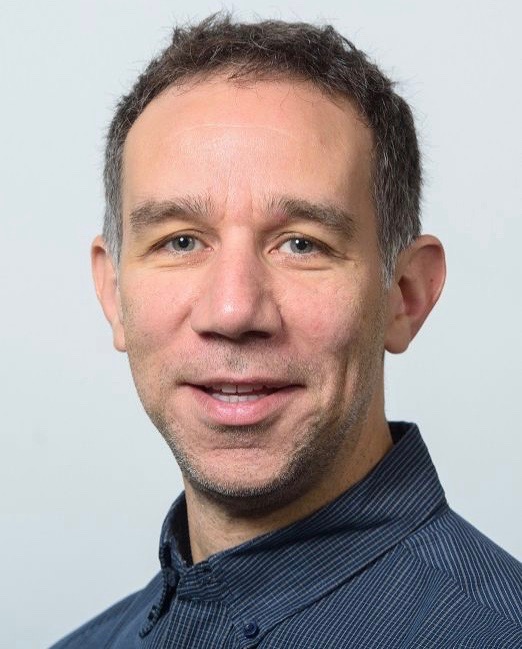
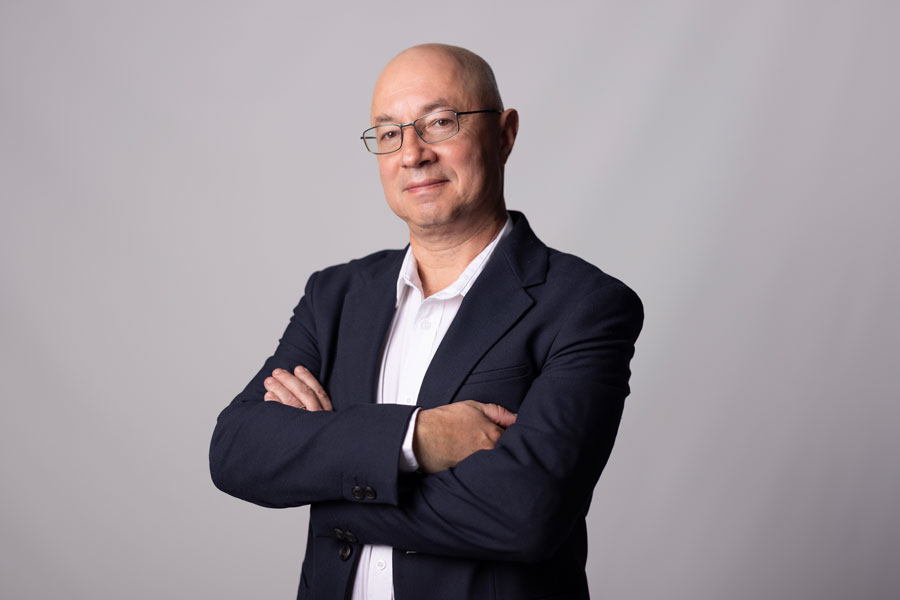
The workshop is a sequel to the workshop held at the kick-off meeting of the ANR/FWF Project SYMDYNAR under the same title, that you can find here .
This workshop is funded by the European Research Council DynAMiCs (ERC Synergy Grant: 101167561)